Liniment cake
The liniment cake is one of Anne Shirley's most spectacular and humiliating failures, a culinary object that crystallizes the tension between her soaring imagination and the unforgiving rules of domestic life at Green Gables. Baked with the best of intentions for a tea party honoring the new minister, Mr. Allan, and his wife, the cake becomes a source of acute mortification for Anne, yet paradoxically deepens her friendship with the understanding Mrs. Allan. It stands as a testament to Anne's characteristic pattern of making mistakes, learning from them, and finding unexpected grace in the aftermath.
The Cake's Creation and Catastrophe
The liniment cake was born from Anne's earnest desire to impress Mrs. Allan, whom she had instantly recognized as a kindred spirit. After Marilla agreed to let Anne make a layer cake for the minister's tea, Anne approached the task with feverish excitement, determined not to repeat past errors. She rose at sunrise on the Wednesday of the tea, and after mixing the batter, she shut the oven door with a sense of triumph, confident she had forgotten nothing. The cake rose beautifully, emerging from the oven "as light and feathery as golden foam," and Anne clapped it together with layers of ruby jelly, imagining Mrs. Allan asking for another piece. However, the triumph was short-lived. When Mrs. Allan, at Marilla's urging, sampled the cake, a peculiar expression crossed her face. Marilla, tasting it herself, immediately exclaimed, "Anne Shirley! what on earth did you put into that cake?" The investigation revealed that Anne, suffering from a severe cold that had dulled her sense of smell, had flavored the cake not with vanilla but with anodyne liniment. Marilla had broken the liniment bottle the previous week and poured the remainder into an empty vanilla bottle, a fact she had neglected to mention to Anne.
Anne's Reaction and Mrs. Allan's Kindness
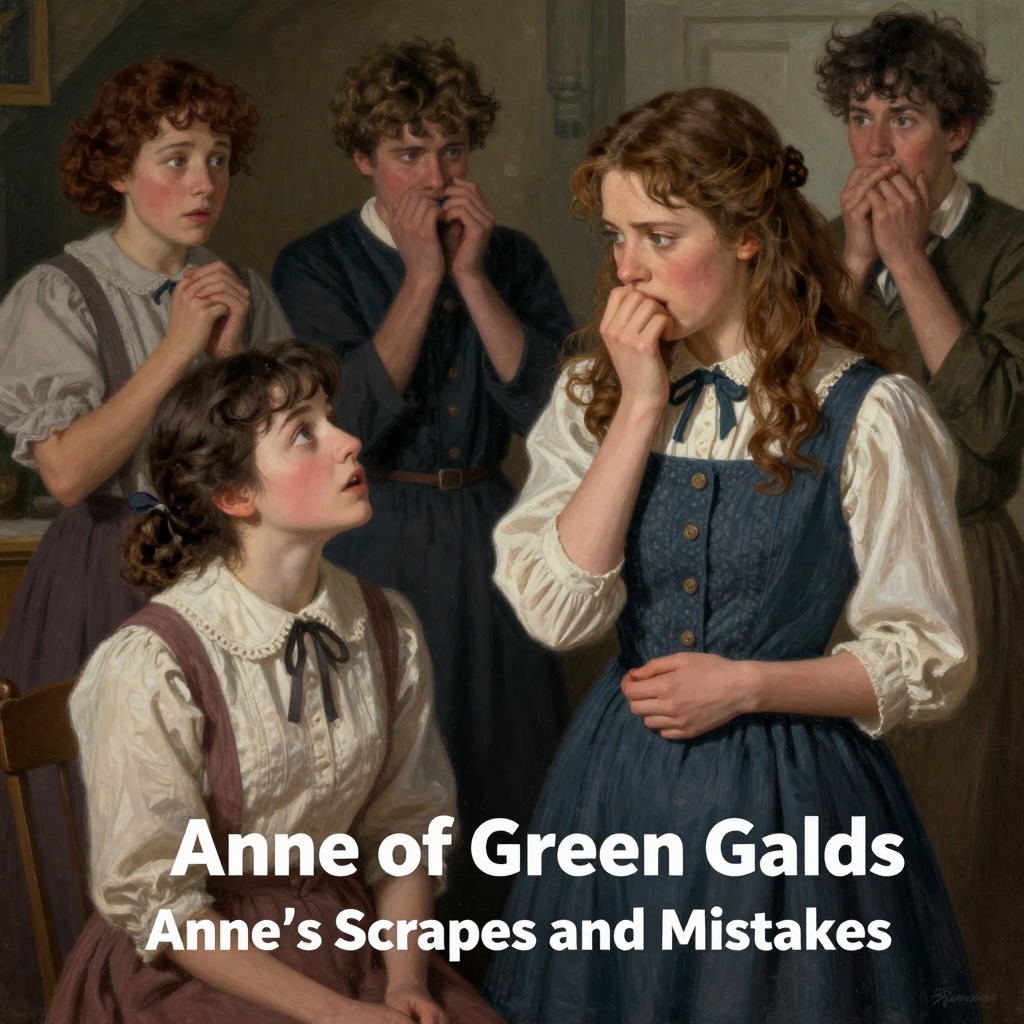
The discovery plunged Anne into the depths of despair. She fled to her gable chamber, cast herself on the bed, and wept, convinced she was "disgraced forever." She imagined the story spreading through Avonlea, with Diana asking about the cake and the boys at school never ceasing to laugh at her. She even feared Mrs. Allan might think she had tried to poison her. But Mrs. Allan, instead of being offended, followed Anne upstairs and comforted her with genuine warmth. She told Anne that the incident was "just a funny mistake that anybody might make" and appreciated Anne's kindness and thoughtfulness just as much as if the cake had turned out right. She then led Anne downstairs to show her flower garden, effectively ending the crisis with compassion rather than reproach. Anne reflected that it was "really providential that Mrs. Allan was a kindred spirit."
The Cake as a Lesson and a Bond
The liniment cake incident became one of Anne's most instructive mistakes. Later, when listing the lessons she had learned from her various scrapes, Anne explicitly connected this event to her carelessness in cooking, stating that "the liniment cake mistake cured me of carelessness in cooking." More importantly, the incident forged a deeper bond between Anne and Mrs. Allan. Mrs. Allan's gentle, forgiving response—so different from the scolding Anne might have expected from Marilla or Mrs. Lynde—demonstrated the kind of Christian grace that Anne admired and wished to emulate. The cake, a symbol of failure, thus became the catalyst for a friendship that would provide Anne with spiritual and emotional guidance throughout her adolescence. The evening, despite the terrible incident, ended with Anne enjoying the company of her guests more than she could have expected, and she went to bed comforted by the thought that "tomorrow is a new day with no mistakes in it yet."